
Arenac Projected and Actual Release
A projected date is a calculation or planned point in a sentence. An actual release date records the completed custody event. They can match, but they answer different questions. For a person held before trial at Arenac County Jail, no sentence calculation may exist. Release can depend on posting bond, a personal-recognizance or conditional order, dismissal, or another court action. A separate warrant or detainer can prevent departure even after the local court authorizes release.
A sentenced person has a firmer legal framework, yet the date still depends on the custodian. The Sheriff computes a county-jail term under the commitment, jail credit, applicable county good time, and holds. MDOC computes a state-prison sentence from the Judgment of Sentence and governing statutes. A parole grant then requires release planning before physical departure.
Disappearance from the Arenac jail does not settle the issue. A transfer to MDOC, another county, federal authorities, or immigration custody is an exit from one facility but not release to the community. Ask for the recorded release type and receiving agency when that distinction matters.
Find an Arenac Release Date
The correct search channel follows the sentence, not the county where the arrest began. OTIS is for state prisoners and MDOC supervision. It excludes people whose only custody was a county jail. Arenac County publishes no official roster or projected-date portal, so county cases require a direct jail and court path.
- Determine whether the person is pretrial, serving an Arenac County Jail sentence, committed to MDOC, or held by another government.
- For a county case, search the Arenac MiCOURT display for bond, judgment, jail credit, sentence, or later order entries.
- Call the Arenac County Sheriff’s Department at 989-846-3002. Ask for the proper records contact and whether a recorded date can be confirmed.
- When direct confirmation is unavailable, request the existing release log or custody entry through the county FOIA process. Ask for actual out date and time, release type, and receiving agency if recorded.
- For an MDOC commitment, open OTIS, search by MDOC number when possible, and compare identity and sentence fields.
- Read status before dates. A prison status, parole status, and discharge status change what the date means.
The broader Arenac County released-inmate search explains how the Sheriff, courts, MI-VINE, BOP, and ICE paths fit together when the custodian is not yet clear.
The official OTIS search source is shown below.
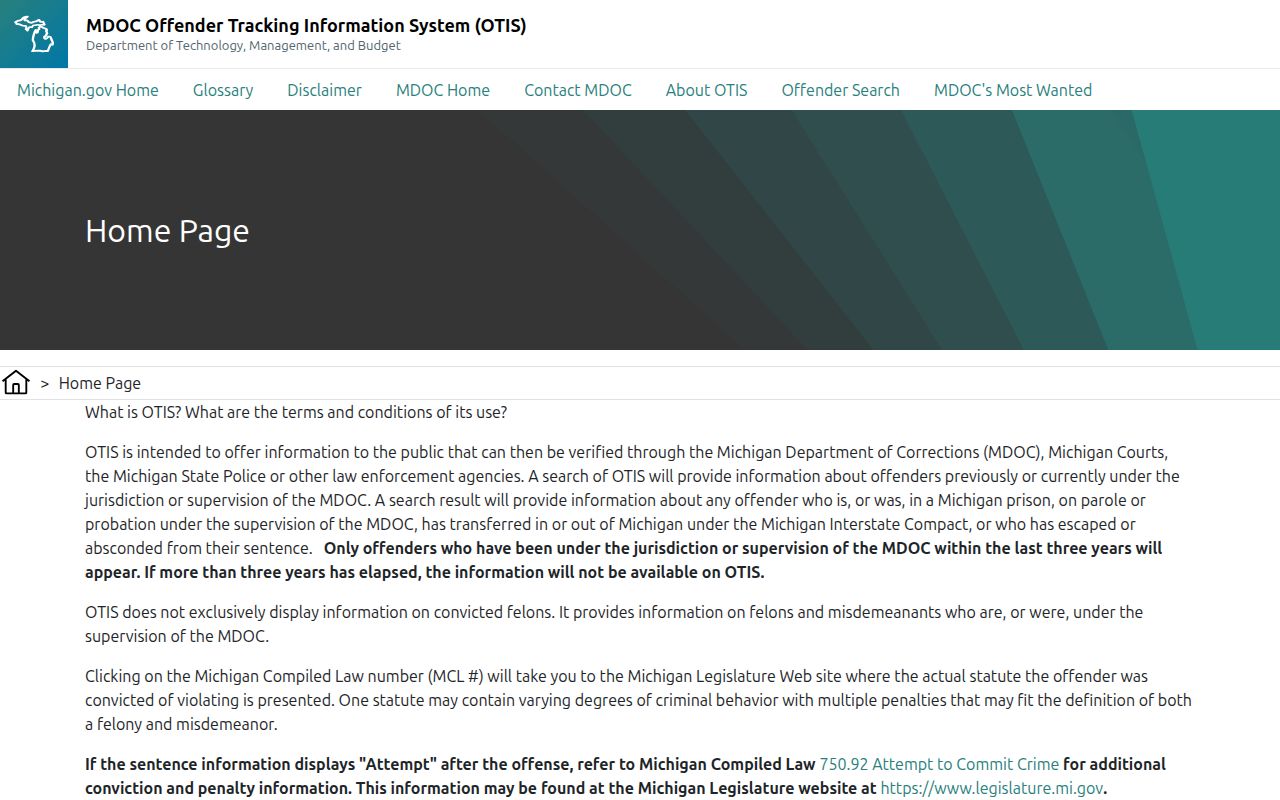
The search fields help distinguish the right MDOC record before any earliest-release or maximum-discharge date is interpreted.
Michigan Prison Date Computation
Michigan does not use a simple rule that all prisoners serve 85 percent. For covered offenses, truth in sentencing requires the full judicial minimum to be served in prison before parole eligibility. Specified assaultive crimes are covered for offense dates on or after December 15, 1998, and the broader rule reaches other covered crimes on or after December 15, 2000. The framework eliminated good time, disciplinary credits, and corrections-center placement against the minimum for affected cases.
Michigan instead uses an indeterminate minimum-to-maximum sentence. The minimum marks the point before which parole generally cannot occur; it does not ensure a grant on that day. The maximum is the potential endpoint if parole does not happen sooner. MCL 769.34 supplies the sentencing and truth-in-sentencing framework, while MCL 791.234 addresses parole eligibility and jurisdiction, including consecutive terms.
Older qualifying offenses require date-specific review. MCL 800.33 preserves disciplinary and special disciplinary credit rules for eligible older cases, including a five-days-per-month framework described in the statute. Offense class, date, consecutive terms, forfeitures, and the version of law all matter. It is not a universal calculator for a modern Arenac County release date.
What Changes Arenac Release Dates
A displayed date can move because the legal source data, credits, or release decision changed. MDOC starts with the Judgment of Sentence. A later resentencing, appeal, corrected judgment, or recalculated jail credit can alter the record. For a county sentence, the Sheriff must also apply the commitment and any valid hold.
| Factor | Possible effect | Best confirmation |
|---|---|---|
| Corrected court order | Changes sentence terms or jail credit | Sentencing court and updated custodian record |
| Consecutive sentence | Adds controlling minimums or maximums where law directs | Judgments and MDOC computation |
| Older credit earned or forfeited | Adjusts eligible historical computations | MDOC records under the governing law |
| Parole decision | Grant, denial, deferral, suspension, or revocation changes the path | OTIS, Parole Release Unit, and facility records |
| Detainer or warrant | Can cause transfer or continued custody after one term ends | Holding agency and release/transfer entry |
| Set-aside or record correction | May change public access or displayed facts | Court order and agency correction channel |
OTIS itself warns that public information may not be perfectly current or complete. Most judgment data comes from courts. Direct a judgment-derived error to the sentencing court; send a supervision designation issue to the supervising office. Record the search date because a saved page only proves what the system displayed at that time.
Confirm Arenac County Release Dates
For a county-jail event, pair the legal authority with a custody record. The MiCOURT register can show bond posting, dismissal, judgment, or another order. The Sheriff’s release log or custody entry can show that physical departure occurred and whether the event was a community release or transfer. Michigan FOIA covers existing records, so ask for a narrow record instead of asking the county to calculate or explain a new date.
MI-VINE can add timely notice for a person held by a participating county jail or for an MDOC custody event. State sources do not provide a current participation table expressly naming Arenac County Jail, so confirm availability. A VINE alert reflects the reporting agency’s event and does not explain the court disposition or rule out a new custodian. The VINE Inmate Check page covers the person-level search and alert steps.
For an MDOC event, compare OTIS status, Date Paroled, and supervising location. A parole grant is not the gate time. MDOC says normal processing includes at least 28 days between a decision and physical release while placement and conditions are set. A grant can also be deferred or suspended. Contact the institution records office for the exact date and time.
Arenac OTIS Date Labels
OTIS uses three date concepts that should never be merged. Earliest Release Date is the point when parole eligibility may begin under the sentence computation. MDOC expressly warns that it is not a definite release date. Date Paroled is historical. It records when the person left prison or camp, or when parole status was conferred in another setting MDOC describes. Maximum Discharge Date is the possible endpoint of the controlling sentence.
Status supplies the needed frame. A PRISON label does not prove release, even if an earliest date has passed. PAROLE means the person left the institutional phase but remains in MDOC custody and supervision. DISCHRG means MDOC jurisdiction ended for that sentence, though the reason must be read because death can be a discharge path. For probation records, date columns can describe supervision expiration rather than a prison event.
The official MDOC status and release-date guidance is pictured below.
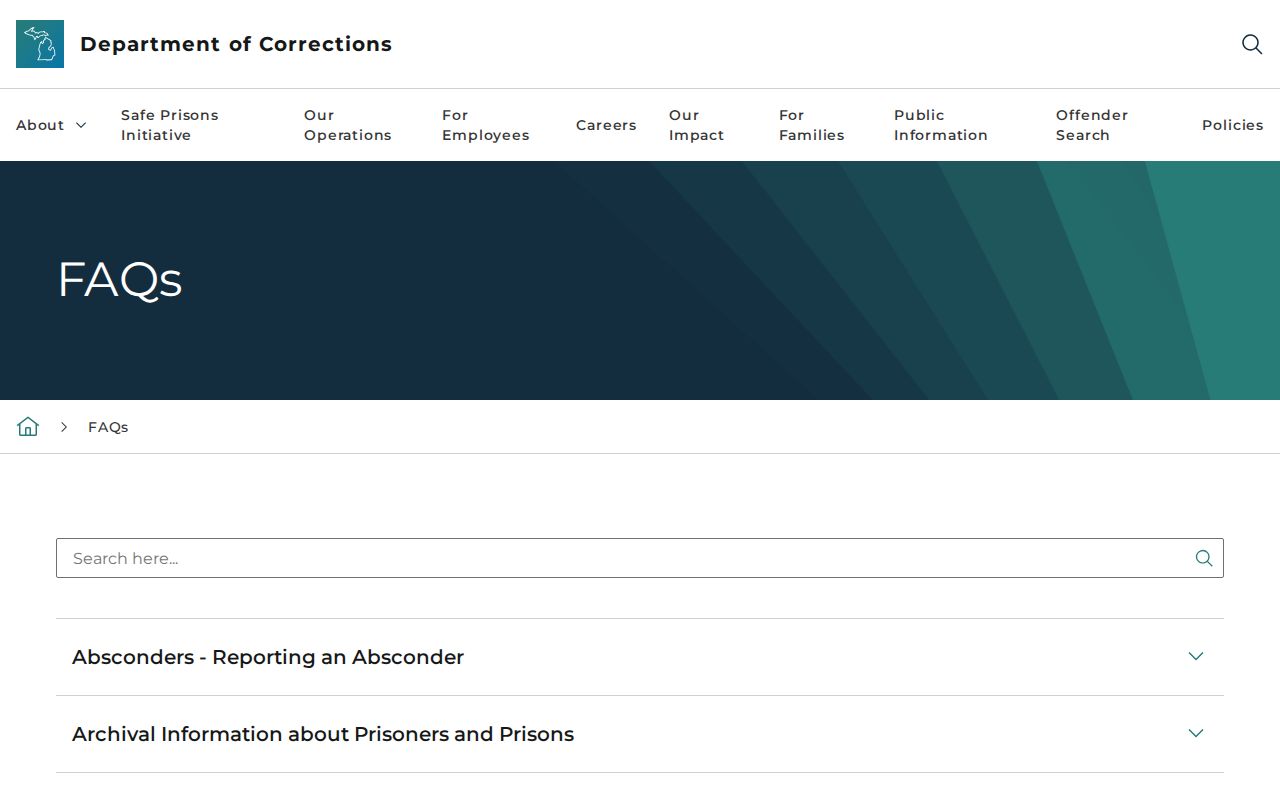
The source reinforces why an Arenac County release date must be read together with status, sentence context, and the date the record was checked.
Arenac Jail Date Computation
A county-jail sentence follows a separate rule from MDOC prison eligibility. MCL 51.281 provides one day of good time for each six days of a county-jail sentence for good behavior under the statute. It does not govern an MDOC minimum, and it cannot supply a dependable release date by itself.
The Sheriff must apply the court commitment, sentence start, jail credit, lawful good-time calculation, and any hold. A court may later amend the judgment. Another county, MDOC, a federal custodian, or immigration authorities may receive the person when the Arenac term ends. Thus, the end of one county calculation may lead to transfer rather than community release.
Arenac County does not publish a date calculator, current roster, or release feed. No official county material established its release hours, weekend process, or exact internal computation fields. The reliable computation channel is the Sheriff’s records function paired with the sentencing court. Ask for the existing commitment, jail-credit information, and projected or actual release entry that can lawfully be disclosed.
Arenac Release Date Records
A narrow county records request can preserve more detail than a phone confirmation. Identify the person by full legal name, date of birth if known, booking number if known, and a limited booking or release range. Seek the existing custody record, release log, or jail movement entry showing actual date and time out, plus the recorded release authority and destination if those fields exist.
The county need not create a new report or calculate a projected date in response to FOIA. Ask for electronic copies and say that redacted nonexempt portions are acceptable. Arenac’s procedures generally require a response within five business days and permit a ten-business-day extension notice. Fees can include qualifying labor, copies, and delivery. No local source established the actual jail-record retention schedule, so do not confuse it with the one-year minimum for retaining the county’s FOIA requests, responses, and appeals.
MDOC uses a different channel. Its public-record route can provide specific nonexempt release and discharge records when OTIS lacks an older record. MDOC identifies separate addresses for current-prisoner record questions and retained past-prisoner records up to six years after release. The agency also describes a PENPACK, but the full packet is limited to recognized criminal-justice authorities for official work. A public requester should name the particular discharge certificate, parole release record, Basic Information Sheet, or date record needed.
Older historical confirmation may also require the judgment and court register. MDOC says its computerized records reach back to about 1980 and directs older inquiries to the Archives of Michigan. OTIS’s three-year post-discharge public window is a display rule, not proof that older sentence records were erased.
Keep the custody verb precise when writing down the answer. “Released from Arenac County Jail,” “transferred to MDOC,” “paroled from a Michigan prison,” and “discharged from MDOC supervision” describe separate events. If the Sheriff’s entry points to another custodian, continue with that agency rather than treating the county out date as final community release.